Recently, I had attended a Music Programme by the University Brass Band of my alma mater. The programme, I think, might have been, part of the farewell season. The stadium stage was very elegantly decorated. Lemon juice was being served optionally, to riverside walkers like me who insist that music, cool winds, gang chat and late evening moonlight should always be accompanied by a glass of drink. I thought of insisting on pop-corn, but I dropped the idea, thinking that they may be forced to put a footer in the email invitation next time, saying attendees may please bring their own pop-corn. The performance was electrifying and included a couple of spiritual remixes of my favorite Rahman tracks, and was probably one of the biggest in the few years. In the end, they invited one of the veteran singers in the community, to speak a few words. I think, he must have been invited ad-hoc from the stage after the performers spotted him in the audience. He was full of praise for the way in which the Band has consistently grown over the years saying 'We may not participate in the inter-collegiate competitions which is held elsewhere, but the talent we have at the Hostel is one of the best.' However, this post is not about how great a particular band is and some other is not. It's about the connection between music and college education in our times.
Many of these students hadn't had a formal training in music before they were picked up to train for the band, that's the beauty of the event and a demonstration of the value of tenacity in a right learning environment. There is usually a little test of music sense held a couple of weeks after you join the degree course. If you clear the test, you would be picked up for being groomed for the brass band or other music groups. I remember very well how I flopped terribly at this test, for all the music I thought I always had in my heavy head. While I had conjured up non-existent questions like the difference between Ada Taalam and Adi Taalam, the test turned out to be a simple but effective one, just to quickly check whether you had a music sense, not whether you were a musician. The examiner asked me to sing or hum the first few lines of a popular Ganesh Bhajan, which he confirmed from me that I was familiar with. I messed up the beat right in the opening word. The next flop was even stupid. He asked me if I can hum a tune that is played by a band during March Past. As I raked my brain to recollect that tune which was just below my throat but refusing to bubble up, he probably thought I didn't know what a March Past was, and helpfully hinted "you know, the music they play when they march left-right". Hehehehe, I had heard it, but again hehehehe, I sheepishly gave up. He didn't have to comment regarding the result. That day, I also understood the inner significance of why my violin teacher, eight years earlier, had told me that I will flourish well in tabla instead of violin. Ahaaa, why did he have to be so diplomatic to a teenager ? May be, he didn't want to hurt the sentiments of someone who purchased a second-hand cycle and a second-hand violin and travelled 3 km each way for 3 months to find out that certain areas of interest should be earmarked for future births. However, this post is not about the ones who failed, but about the ones who succeeded by their tenacity.
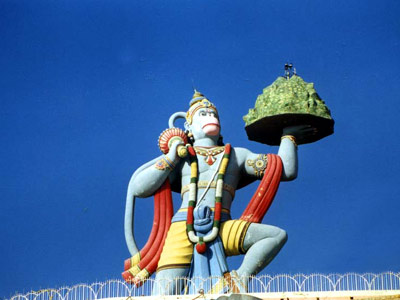
I remember my room-mate and classmate during my MBA, who went through the same test. No one even faintly guessed he had a musical streak in him but he was selected to train for the band, on cymbals. I am not sure if he still continues his interest in music while working with SAP. I used to admire the way in which these guys would apply themselves regularly and consistently, starting almost from nothing. Most of the time, the 'teacher' would be mostly a college senior, a member of the band who plays the same instrument and may be in his final year. Other times, you were your own teacher. They would be found practicing in groups or repeating and perfecting what they have learnt earlier, sometimes near the library, sometimes at the stadium, sometimes on the Hanuman Hill and all the time humming at their cupboards. Their public performances would have to be of impeccable quality and they would leave no stone unturned to see to it that it was. Not that the hostel schedule was any lighter, they would have to go through what we called "life is an interval between two bells". Starting from nowhere, from a hum test, by the time their stay for 3, 5 or 7 years in the Hostel gets over, they would have mastered the instrument, become adept at performing as a band and given quite a few public performances in glory. Quite often, at the farewell functions, both the artists who performed for a jugalbandhi would be introduced as "both learnt the instrument on their own after joining the first year".
Youth is clay. It gets moulded the way you shape it. It applies itself to what you point to it. It succeeds in whichever skill you inspire it to learn. Our small towns have lots of it and waiting for the proper direction and bringing together. If the best of our institutes can incubate the start-ups seeded by their management graduates, in the small towns, all the hidden potential talent in music, sports and literature can and should be incubated and groomed in those three years, the best prime time of our youth. I know students who joined as dwarfs, literally, but would apply themselves at sports so rigorously and regularly, finding time between Yoga and learning Vedam and few other varied skills, and would finish by captaining Basketball and the Volleyball teams in their final year. Application, Focus, Tenacity, the mantras of success, are sown, learnt, tested and demonstrated, best when you are in college. This is true, not just about music, but about any area which you choose for yourself. Like in this post from Randezvous Perceptions which mentions decoration.
I remember the small town college in which I had done my UG. For a sleepy little tobacco town, we had all kinds of extra-curricular associations, the Toastmasters Club, a Tamil literature club called Thamarai Vattam, a Personality Development course all of which I would juggle with. There were many after-college courses, in addition to the village camps of NSS, the Adult Education campaigns and the free eye camps organised by Arvind Hospitals with volunteering from students. Some colleges had courses on Arabic, Gandhian Economics and Agarbatti making. I remember explaining about a computer and taking Rs.100/- from my mother for a WordStar course, for this "new computer cheej", 100 rupees for 10 days-10 classes, everyday one hour. It might have been glorified typing at the time, but it led me to the next Rs.100/- course in the Basic language, a field that would catch my fascination and I would settle in. In contrast, however, the band wasn't a great place. It would mostly consist of people who already knew how to perform, played a few jumping numbers and the only occasion I remember they played seriously was after the college union elections. That I failed at the music test even there is something you should not ask about. If you conduct a test now, I would fail, but I would show up again at the next test, until you notify Security to disallow losers. Even then, since I wouldn't call myself one, I might take a printout of this post and try to convince the gatekeeper.. May be I believe, if I fail all tests in this birth, success will be instantaneous in the next birth and my opening cry will be a Thyagarja Kirtan ??
It's not just about extra-curricular interest and development of a versatile personality, it's also about the direction at which these talents are directed and the shapes they take after the skill is mastered. The value of tenacity invested at that time of life, is invaluable in the later years. Ironically, as life would have it, those who skipped it would realise it only in the later years and those who apply themselves in concerted self-development will fondly remember those days as the most productive as well as enriching phase of their lives. The excellence streak in Youth is ready to proliferate if we can create a culture that promotes positive action and a formal or informal reward environment that recognises positive application of such effort. This YouthCurry blog post makes a passing reference on how bands in colleges have a short, rocky existence and interest wanes after a while. May be there is nothing much we can do, is it ? No. Band or not, one of the things that a college or university, should do, is to create an environment or culture that promotes versatility, tenacity and recognising the value of higher inspiring goals for application of such effort, whatever you define such noble goals to be. If our colleges continue to just exploit the energy and passionate zeal of the youth to the benefit of frivolous areas, waste them into controversies and be chaltha-hai about irresponsibility, instead of focussing on developing richness in their thinking patterns and preparing them to be responsible citizens, desh ka band bajega.
P.S. As to those millions of readers who are pining to know the answer to why I haven't blogged for long... I won't feel off as if I was Stephen King and attribute it to Writer's Block. I would instead take refuge in this many-faced fellow blogger's succinct reference to a famous punch dialogue : Sneeze, Cough, Hiccup, Yawn, blah blah blah and Blogging Ideas do not come when we demand it. We cannot stop it when they come and we cannot hold them back when they leave.
Thursday, March 12, 2009
The value of Tenacity in Youth

Saturday, March 22, 2008
Your Smile means I am fine...
Similar to the incident where I met the 100-year old man, I happened to meet another elderly person. I was in the hospital to meet a friend and someone mentioned about this person and said he was also admitted in the same hospital for some ailment. I never knew him, I hadn't talked to him anytime before, but I knew he was a resident of the community. A couple of other friends also thought let's go and visit him although none of us knew him well. So we went to his ward. He knew only one among our group but he understood we are a gang. He must have been in his late eighties (or may be in early nineties). As we could see, his ailment had taken a heavy toll. The first thing that happens, I think, to some people who are otherwise healthy, well-built for a long time and suddenly fall sick in their old age is that, they lose their cheeky build and drastically reduce to a thin frame. He had great difficulty having food on his own and his wife was feeding him a semi-liquid from a cup. We thought it wouldn't be good manners to step in but they said its okay and moreover, it was already getting dark and we thought he might wish to take rest later. His wife was also in her eighties and still does voluntary work.
I felt that though his frame had reduced, the shine in his eyes had not. He mentioned about my friend's father and recollected how they went back a long time, though they had branched out into different workplaces. He was happy that we were visiting him although he actually knew only one of us. He said: I am not so sure about the ailment and the pain that has inflicted me, but when I see the (well-wishing) smile on your faces, then I know I am getting well. Your smile is a sign of my wellbeing. I had mentioned in an earlier post, that elderly couples, after a threshold age, go on to become good old buddies, with the bonding turning almost as a spiritual friendship. I felt the same way when I saw the old lady feeding her husband. Seldom do young couples pause to think that the test of true bonding lies far ahead later in life, that the best of fun times are only the beginning part of the wedding promises and keeping them up till the end is the proof of the pudding.
They both probably had come to the plain realisation that the ailment may be terminal. She mentioned, that the God they believed in, whatever He did would be good to them. Wow, I thought. It's easy to debunk or theorise about a belief in God, but it's tough to turn that faith, whatever God you may have, into a positive strength when it matters the most and when all our devices are shutting out in non-co-operation. You know that your most possessive possession so far, your own body, is giving way and you have to use the strength of something that is not made of body stuff. You don't even want to think of trying that, and even tougher to try it at 80+.
His strength was even better. Similar to the earlier incident, his mental strength was amazing. His voice was blurred so I couldn't get it verbatim, words came with breaks, but let me capture the main idea. He said : Suffering is a great test of your spirituality. For a long time, we have been 'knowing' the whats and hows of being spiritual, but in such a situation, it is a test to have the faith that My God is always with me. And I firmly believe He is with me. That the condition of the body is this or that doesn't matter, but in my mind I know, whatever happens we have His Blessings. This is the time to remember, and actually practise what we have always known all these years.
It set me thinking on suffering. Suffering, I agree with him, is really a great test of spirituality. Other times, you probably "apply" your spirituality "on others", to third party situations, but the acid test of your spirituality is when a real suffering touches you directly. Dhoodh kaa dhoodh, Paani kaa paani Ho Jayega. Buddha devoted his entire life in finding the answer for this one question. We live off our lives not bothering about it, as if it were out of syllabus, but dude, thats one sure question thats going to be on exam paper. For, old age and its accompaniments are a certainty and more often, such a certainty that we will most likely be all alone to handle the actual stuff. If at all you want to have an Either-Or choice, now is the time make that choice between becoming a Budda or a Buddha. The others can rally around you in support, speak nice words and may be even help you out, but there is no proxy for living out your pain. You have to do it, yeah scary it is, all by yourself, bit by bit. This requires a lifetime's preparation of your mind, brick by brick, to keep it strong in old age. When the body is strong, the mind may fritter away, but if such a frittering can be streamlined and built to be strong, then such a strength would come in handy when the body is on its withering way.
I and one of my friends are opposites in our lifestyles. There are many unhealthy elements in my lifestyle, I blog after midnight and I sleep late, I have a lot of junk food and less of healthy food, I live like a sin(e) curve, don't keep a standard schedule etc. Whereas he lives his life as if a clock decided to become a human being and bless the earth, and lives in a very simple straight line, while a few others run around in circles. :) . I often joke that he is like The Wall, stay and play, ball by ball and hit a slow century. Another friend of mine jokes that he spends the first 60 years in disciplined suffering so that he may live the next 20 happily, whereas others spend first 60 merrily and suffer the last 20. While I often quip away the flexi lifestyle to be the ultimate exercise of Brahamachari independence, I have to sheepishly agree when well-meaning friends often insist, will rolling eyes, that body will soon show its signs. Come to think of it, the jokes apart, my friend does have a healthier lifestyle than mine, and the compliment is not only about the body. The health of the mind that you acquire across years is going to be a major support when you have crossed most of your years. This recent quote about paradoxes on Prasanna's blog puts it well.
When we moved away from that hospital bed that night, after holding his hand reassuringly for a moment, wishing him the best and praying for his good health, we didn't know he would be no more within two weeks. But those two minutes of interaction with him had set us all thinking on why it is important to live a life in a particular way and not just in any way, anyway.